







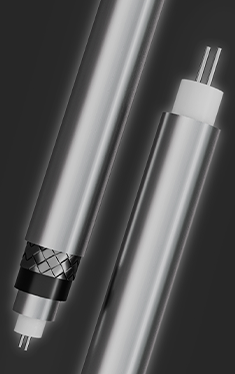



How You Should Select, Apply, and Win in This Growing Market
If you are working in the oil and gas industry, you already know that oil and gas cables are not just accessories—they are mission-critical infrastructure. Whether you are involved in upstream drilling, midstream pipeline transmission, or downstream refining, the cables you choose directly impact operational safety, efficiency, and lifecycle cost.
- Market Outlook:
The global oil and gas cable market size reached USD 2.2 billion in 2025, and is projected to grow from USD 2.38 billion in 2026 to USD 4.57 billion by 2034, with a strong CAGR of 8.49%.
This growth is not theoretical—it directly affects your procurement strategy, supplier selection, and product positioning.
What’s driving this growth?
- Increasing industrial automation in oil & gas
- Expansion of refineries and pipeline infrastructure
- Rising demand from emerging economies
- Growth in offshore and deep-water exploration
If you are sourcing or supplying cables, this means one thing:
- Understanding Oil & Gas Cable Applications Across the Value Chain
You cannot select the right cable unless you clearly understand where it will be used.
Upstream (Exploration & Production)
In upstream operations, you deal with:
- Drilling rigs
- ESP (Electric Submersible Pump) systems
- Well intervention equipment
Typical cables:
- ESP cables
- Downhole power cables
- Instrumentation cables
Case Example:
You are supplying cables for an ESP system in the Middle East. The well temperature exceeds 120°C and fluid contains high H₂S. A standard PVC cable will fail quickly.
Instead, you choose a TPE or FEP insulated ESP cable, ensuring long-term reliability.
Midstream (Transportation & Pipelines)
Here, your focus is on:
- Long-distance pipeline monitoring
- SCADA systems
- Leak detection and communication
Typical cables:
- Fiber optic cables (oil and gas)
- Control cables
- Armored signal cables
Case Example:
You are working on a pipeline project in Africa. The client requires real-time monitoring.
You integrate fiber optic cables for pipeline monitoring, enabling predictive maintenance and reducing downtime.
Downstream (Refining & Processing)
This is where complexity increases:
- Refineries
- Chemical plants
- Storage terminals
👉 Typical cables:
- VFD cables (Variable Frequency Drive cables)
- Power cables
- Instrumentation cables (P-type, E-type)
Case Example:
In a refinery project, you install VFD cables to control motor speed for pumps.
This improves energy efficiency and reduces mechanical wear—delivering measurable ROI.
- Key Types of Oil & Gas Cables You Should Know
When you evaluate suppliers or design solutions, these categories matter:
- VFD Cables (Variable Frequency Drive Cable)
- Used for motor speed control
- Reduces energy consumption
- Critical in refining systems
- Fiber Optic Cables
- High-speed data transmission
- Ideal for smart oilfield and digital oilfield systems
- Copper Cables
- Reliable power and signal transmission
- Widely used in traditional infrastructure
- ESP Cables
- Designed for downhole harsh environments
- Must withstand heat, pressure, oil, and chemicals
- Instrumentation Cables (P-type & E-type)
- Used in process control systems
- Ensure accurate signal transmission
- Material Selection: Why Cable Jacket Matters More Than You Think
If you ignore cable sheath materials, you are making a costly mistake.
Common Jacket Materials:
- Polyethylene (PE)→ Best for offshore & UV resistance
- PVC (Polyvinyl Chloride)→ Cost-effective, general use
- TPE (Thermoplastic Elastomer)→ Flexible, high durability
- CPE (Chlorinated Polyethylene)→ Oil-resistant
- FEP (Fluorinated Ethylene Propylene)→ High temperature & chemical resistance
👉 Market insight:
PE (polyethylene) dominates the oil and gas cable market, especially in offshore and pipeline applications.
- Performance Requirements: What You Should Never Compromise On
Oil and gas cables must meet extreme performance standards:
- Oil resistance
- UV resistance
- Mechanical protection
- Continuous flexing capability
- High temperature tolerance
- Corrosion resistance
If your cable fails, your entire system is at risk.
- Regional Market Opportunities: Where You Should Focus
Asia-Pacific (Your Biggest Opportunity)
- Market leader with massive growth
- China alone driving demand through:
- Belt and Road Initiative
- Offshore wind + deep-water oil projects
Europe
- Focus on renewable energy integration
- Strong demand for high-voltage oil & gas cables
- Grid modernization projects
Middle East & Africa
- Massive investments (over USD 50 billionin energy projects)
- High demand for durable and high-temperature cables
Latin America
- Moderate growth
- Brazil leading due to:
- Deepwater oil exploration
- Offshore transmission systems
- Automation Trend: Why Smart Cables Are Your Future
Industrial automation is no longer optional—it is your competitive edge.
What’s changing?
- Integration with SCADA systems
- Real-time monitoring
- Predictive maintenance
👉 Market data:
- Automation adoption is significantly increasing
- Smart cable demand is rising rapidly
Case Example:
You supply cables integrated with sensors in a refinery.
The system predicts insulation degradation before failure—saving millions in downtime.
- How You Should Select the Right Oil & Gas Cable
When choosing cables, always evaluate these three factors:
- Environment
- Offshore vs onshore
- Temperature range
- Chemical exposure
- Application
- Power transmission
- Data communication
- Control systems
- Lifecycle Cost
- Initial cost vs maintenance cost
- Replacement frequency
👉 Practical advice:
Never choose the cheapest cable—choose the lowest total cost of ownership (TCO).
- Final Insight: How You Can Win in This Market
If you want to succeed in the oil and gas cable industry, focus on:
- High-performance materials (FEP, TPE, PE)
- Application-specific solutions (ESP, VFD, fiber optic)
- Automation compatibility
- Regional market targeting
And most importantly:
👉 Align your product pages with SEO keywords like:
- oil and gas cable manufacturer
- ESP cable supplier
- offshore cable solutions
- industrial instrumentation cable
Conclusion
You are operating in a market that is growing fast, becoming more technical, and increasingly competitive. Oil and gas cables are no longer just components—they are critical assets in modern energy infrastructure.
.